
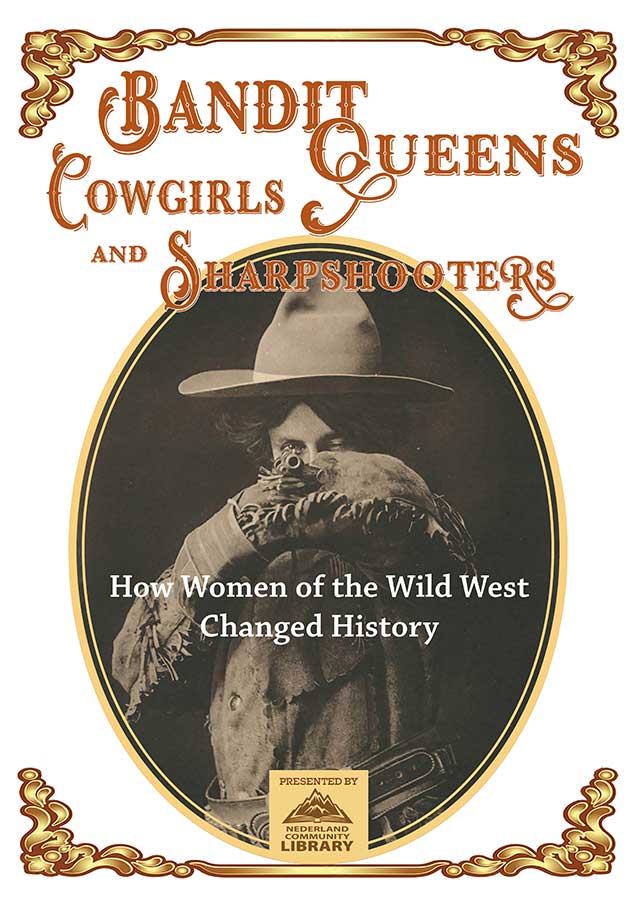
Bandit Queens, Cowgirls, and Sharpshooters: How Women of the Wild West Changed History
 Exhibit at the Library of Zeeland in Middelburg, The Netherlands, September 2025.
Sharpshooters
Little Sure Shot
Annie Oakley
Both lucky and extremely talented, Annie Oakley used her astonishing marksmanship to escape a poor childhood in Ohio and become the first female superstar in what had been a male-dominated profession.
Annie Oakley was born Phoebe Ann Moses in 1860 in rural Darke County, Ohio. Her father died when she was young, and Annie was sent to the county poor farm. At age 10, she was sent to work for a family who treated her cruelly — she called them “the wolves.” Eventually Annie ran away from them and was reunited with her mother. Annie helped support her family by shooting game in the nearby woods and selling it to a local shopkeeper. Her marksmanship paid off the mortgage on her mother’s house and led her to enter a shooting match with touring champion on Thanksgiving Day 1875. To Butler’s astonishment, the 15-year-old beat him in the competition. Butler fell in love with her and they were married the next year.
After a few years, Annie replaced Frank’s male partner and soon Butler began managing the act, leaving the spotlight to Annie. At one event in Minnesota, in 1884, Oakley attracted the attention of Native American warrior Sitting Bull, who adopted her and named her “Watanya Cicilla,” or “Little Sure Shot.” She joined Buffalo Bill Cody’s Wild West in 1885 and performed in the show for most of the next 17 years. Oakley dazzled audiences with her shotgun abilities, splitting cards on their edges, snuffing candles, and shooting the corks off bottles. While maintaining her modest wardrobe, she also knew how to please a crowd, blowing kisses and pouting theatrically whenever she intentionally missed a shot.
Oakley’s career took off when she performed with Buffalo Bill Cody’s show at the American Exposition in London in 1887, and Oakley became America’s first female superstar.
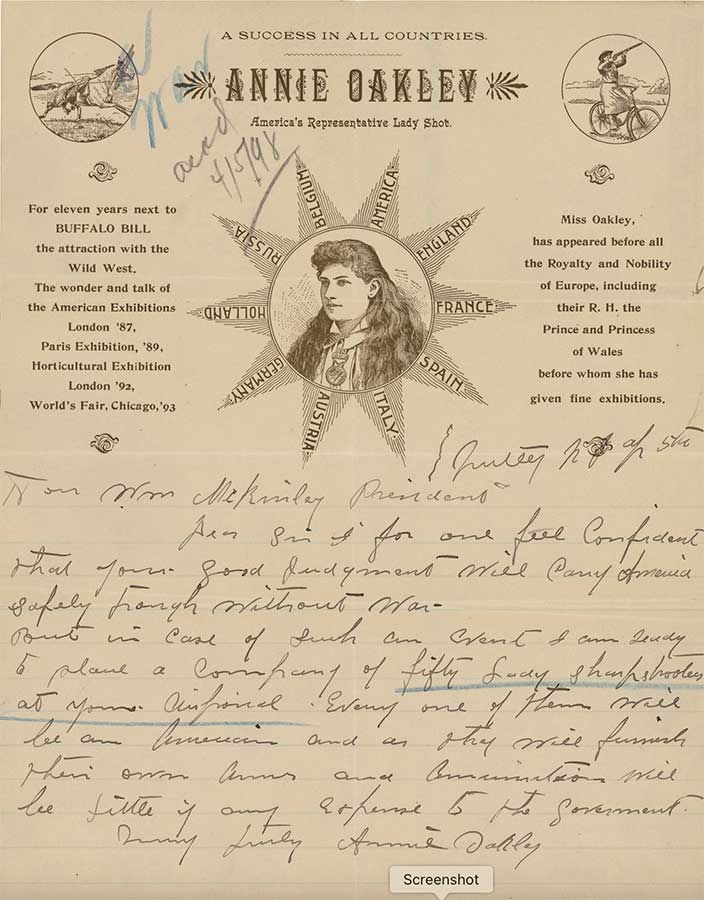
At the outset of the Spanish-American war in 1898, Annie wrote a letter to President William McKinley offering the services of a company of fifty lady sharpshooters. That offer and a similar one Oakley made during World War I were not accepted.
Oakley earned more than any performer in the show save Cody, but Oakley supplemented her income with shooting competitions on the side. With Oakley’s skills — on various occasions she hit 483 of 500, 943 of 1,000, and 4,772 of 5,000 targets — she did quite well on the shooting circuit.
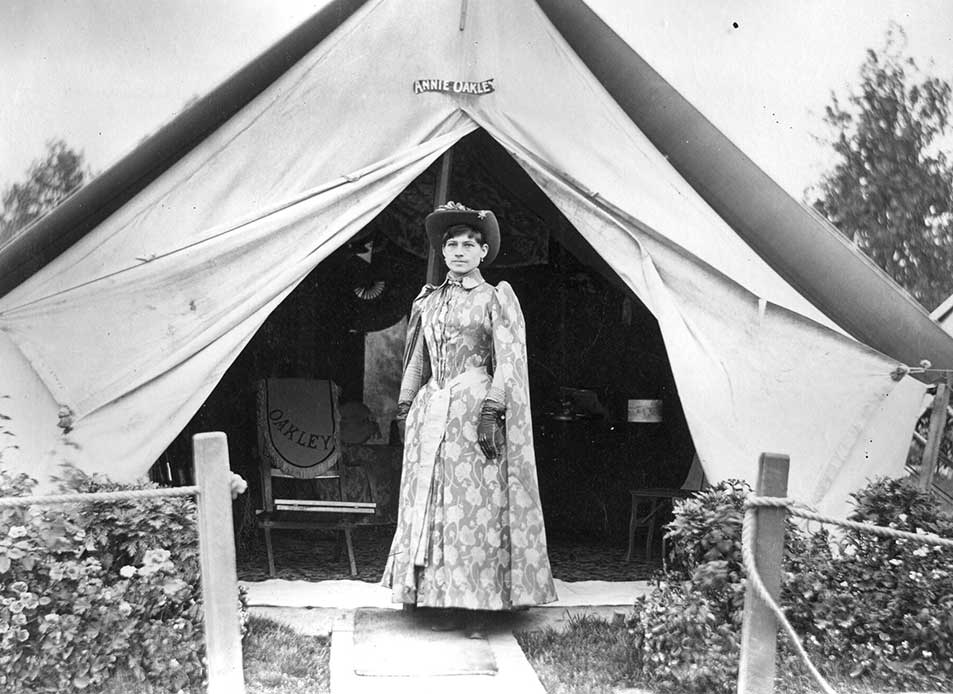
Oakley performed until 1913. She retired in Maryland and North Carolina, hunting and giving shooting lessons to other women and performing at charity events. During World War I, Annie offered to raise a regiment of crack female sharpshooters, but the government ignored her, so Oakley instead raised money for the Red Cross by giving shooting demonstrations at army camps around the country. Annie Oakley died on November 3, 1926. Frank Butler, to whom she had been married for 50 years, died 18 days later.
Princess Wenona
Lillian Smith
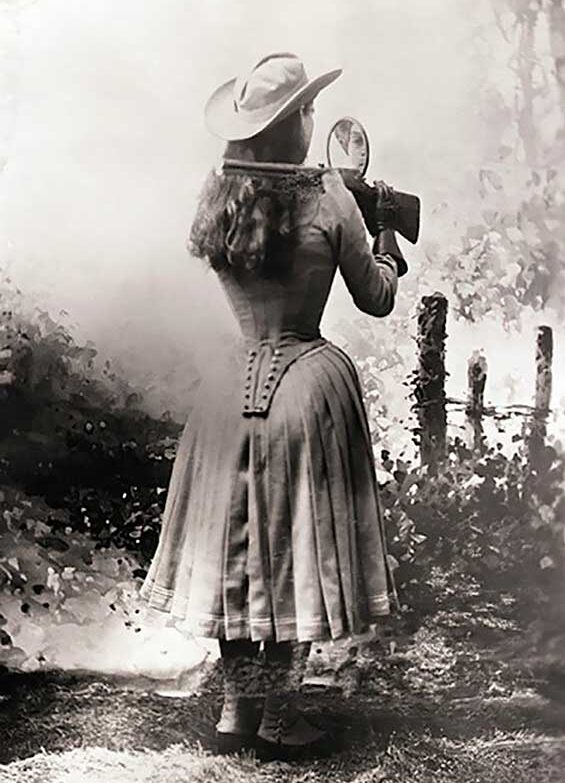
Fourteen-year-old Lillian Frances Smith exhibited no anxiety or hesitation when she hoisted her 7-pound Ballard .22-caliber rifle. From a distance of 33 feet she targeted swaying glass balls hanging by wires from the wooden figure of a deer suspended in midair.
With unfailing aim she fired from her right shoulder, then from her left shoulder, and, finally, shooting with the rifle held upside down and backward over her shoulder, sighting with a hand mirror. Not once did she miss. Still aiming backward using the same mirror, she shot at 10 glass balls sprung in quick succession from a trap—and burst them all before they hit the floor.
She could break 25 glass balls in a minute, strike a plate 30 times in 15 seconds, and shoot two balls revolving rapidly on a string around a pole. Alternating between a revolver and a Winchester rifle she hit the bulls-eye time and again, both on horseback and afoot.
She enjoyed a fifty-year career, from the ten-year-old “California Huntress” to her reinvention as “Princess Wenona,” a forged Indian persona that shielded her tumultuous private life.
—Julia Bricklin, America’s Best Female Sharpshooter: The Rise and Fall of Lillian Frances Smith
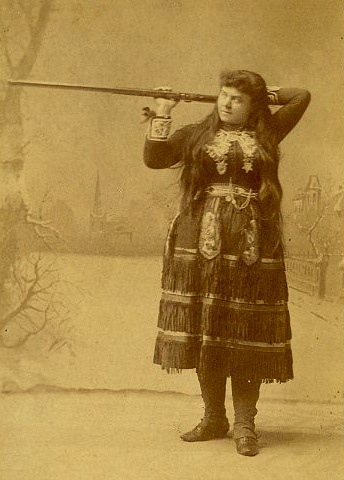
Fourteen-year-old Lillian Smith used a 7-pound Ballard .22-caliber rifle. From a distance of 33 feet she targeted swaying glass balls hanging by wires from the wooden figure of a deer suspended in midair. With unfailing aim she fired from her right shoulder, then from her left shoulder, and, finally, shooting with the rifle held upside down and backward over her shoulder, sighting with a hand mirror. Not once did she miss.
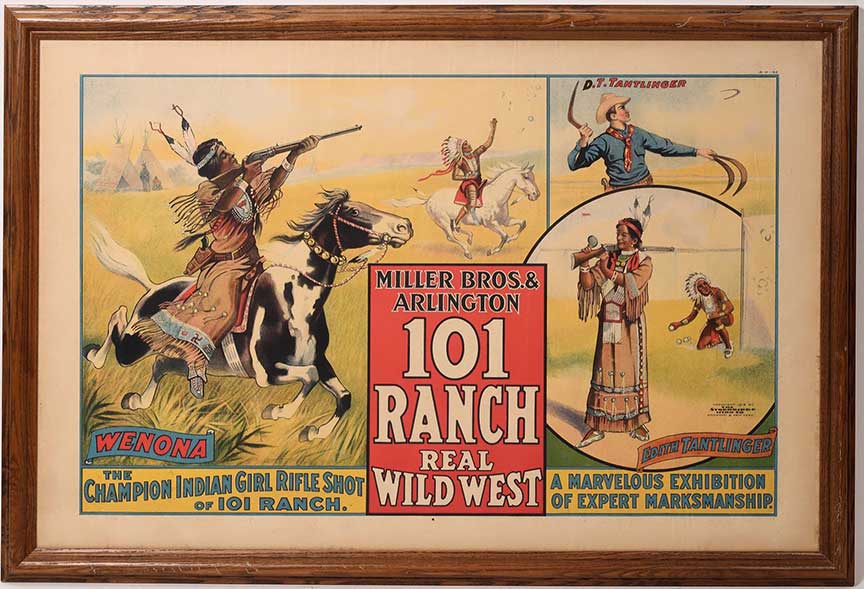
Around the turn of the 20th century Lillian changed her name to Wenona and began to darken her face with makeup and dress in a beaded suede tunic. She added “Princess” to her name when she joined Pawnee Bill’s Wild West. The California Girl was now an Indian girl. She wore beaded buckskin dresses or jumpers and routinely styled her hair in braids, sometimes crowned in feathered headpieces.
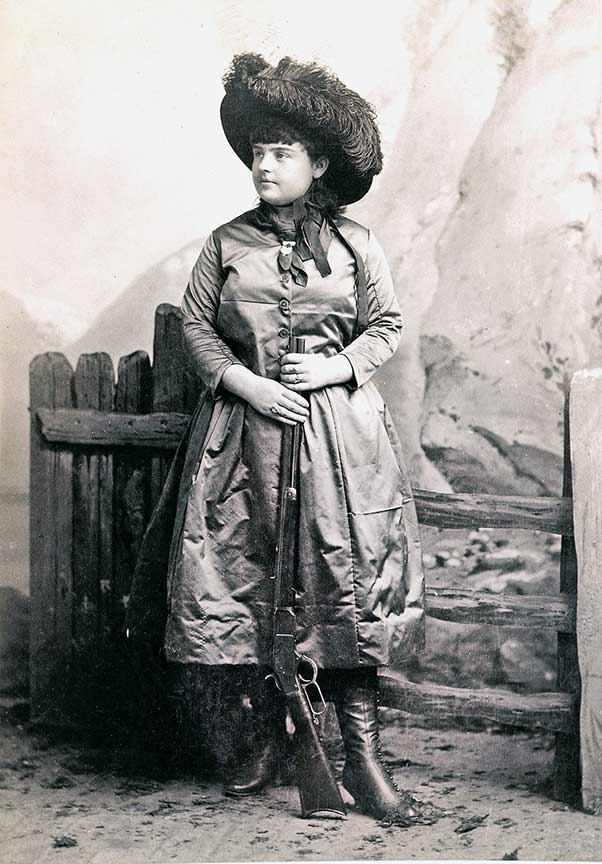
“Of 50 balls thrown into the air, but four were missed. Ten balls were broken inside of three minutes, though they were only seen in a hand mirror and shot at over the shoulder.…Balls made to revolve in a large circle at the end of a cord were demolished and their fragments sent flying over the orchestra, seriously interfering with the high notes of the tuba.”
—The San Francisco Daily Record-Union, 1881
COLORADO HUNTRESS
Martha Maxwell
Taxidermist Martha Maxwell was such a good shot that no one could tell how the animals she stuffed had been killed. She was asked to represent the Colorado Territory at the 1876 Centennial Exhibition at Philadelphia by displaying her collection of wildlife specimens presented in natural habitat groupings.
She had always been fascinated by unusual animals and “living curiosities,” but most Americans would not have been able to see these creatures of the West unless they were displayed. She brought down her quarry with a single well-placed shot—first having observed with great care the habits of the animals she stalked so she could pose them realistically in her taxidermy studio. Frustrated by visitor incredulity that a woman could have conceivably done all this, Maxwell put up a sign that read, “Woman’s Work.”
From May to November, the Centennial Exposition attracted an estimated 9.8 million visitors.
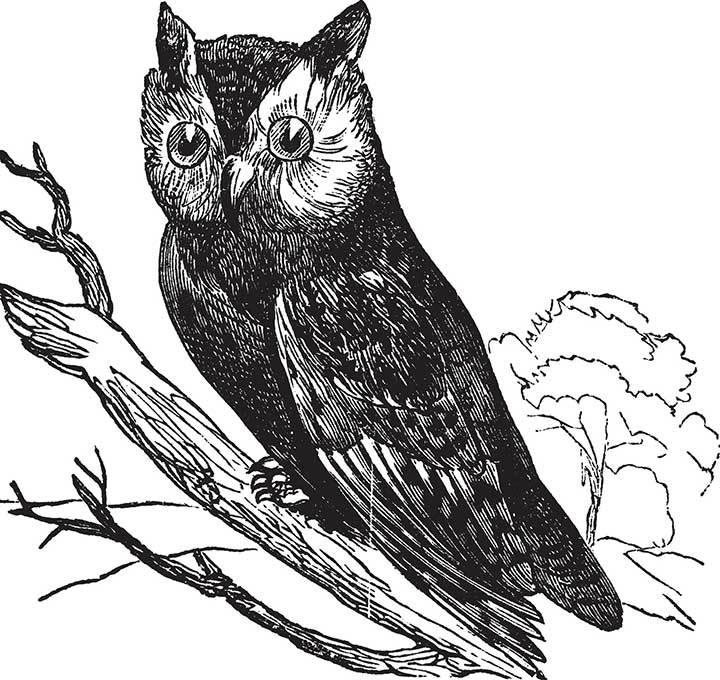
Martha Maxwell was the first woman field naturalist who obtained and prepared her own specimens in the same manner as her male contemporaries and brought innovation to the design of natural history dioramas. In 1877 Smithsonian ornithologist Robert Ridgway named the little screech owl, Scops asio maxwelliae, after Martha for her discovery of this subspecies of owl.
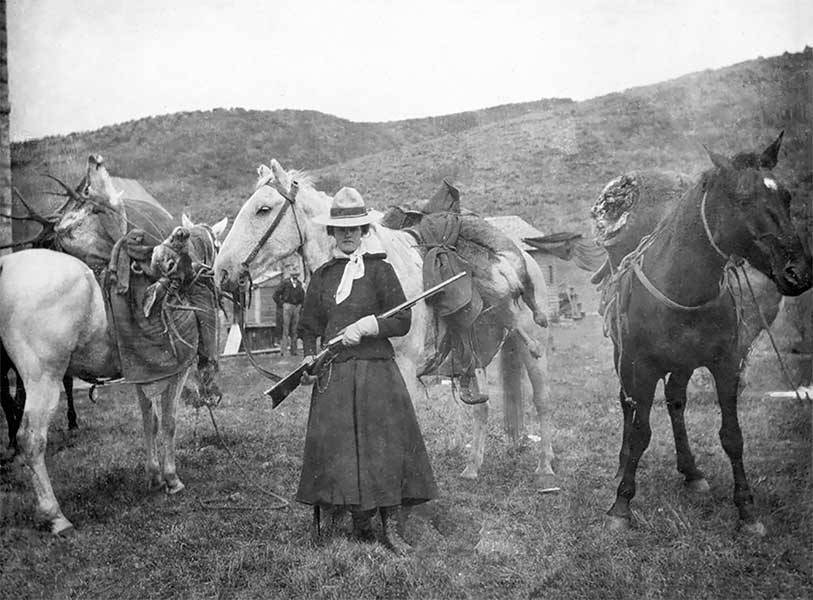
One historian has written, “Martha had come to see her work as the best way for her to demonstrate the abilities of women and thus to support the cause of feminism.” About herself Martha wrote, “My life is one of physical work, an effort to prove the words spoken by more gifted women….The world demands proof of womans [sic] capacities, without it words are useless.”
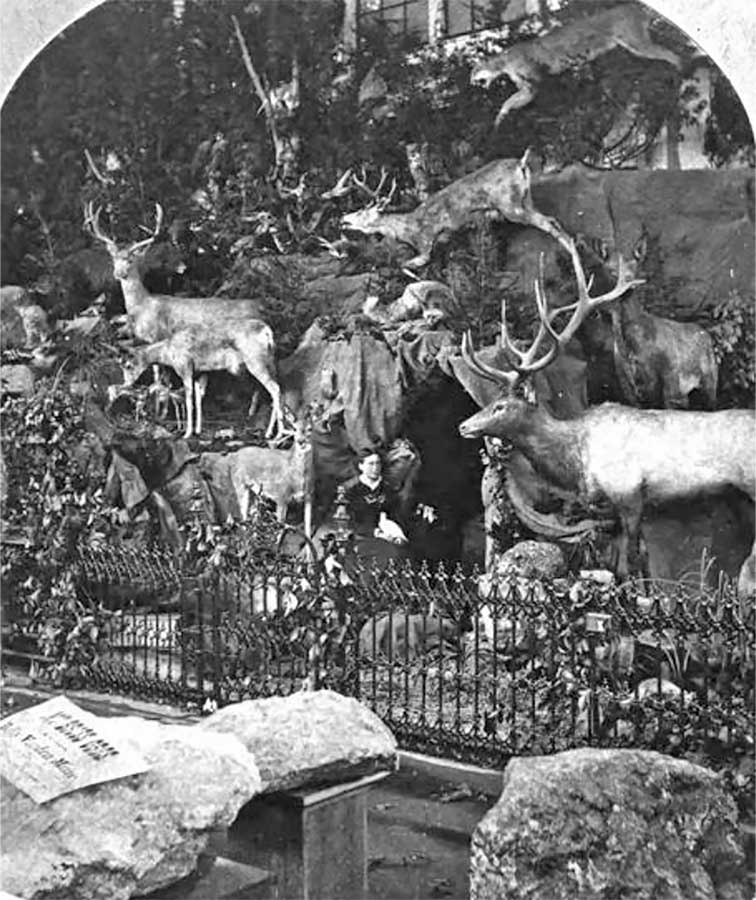
Martha exhibited 600 specimens at the St. Louis Fair in 1870. She sold the collection for $600. She observed the habits of the animals she stalked with great care so she could pose them realistically in her taxidermy studio. She was the first woman field naturalist who obtained and prepared her own specimens in the same manner as her male contemporaries, and she brought innovation to the design of natural history dioramas.
Sharpshooters Annie Oakley, Lillian Smith, and Martha Maxwell not only held their own as women in a man’s world, they often out-performed their male peers.
SEE MORE FROM THE EXHIBIT: Bandit Queens >> Cowgirls>>
GOLDIE!
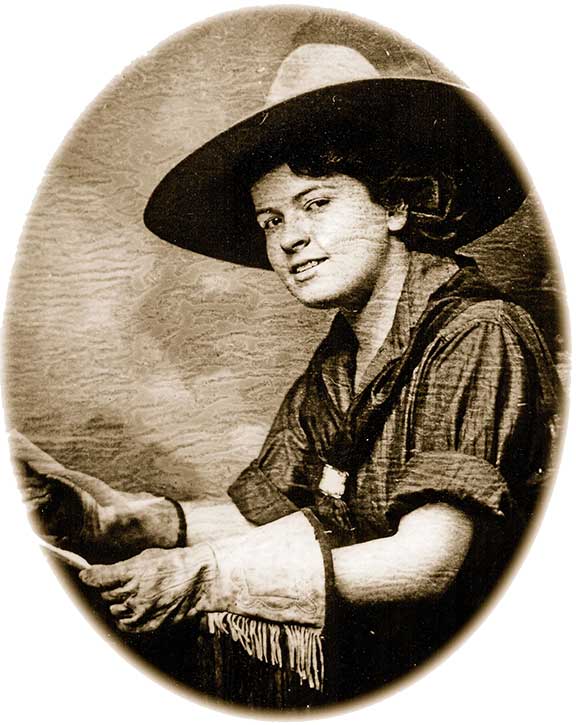 Read about Goldie Griffith
JOIN ME
every other week
on Cowgirl Cocktail
for more Wild West history